Key Takeaways
A seller’s guide to selling land to a developer: how they price a parcel, what makes land attractive to them, and where to find active buyers.
- Developers price land by residual value, backing into what they can pay from the finished project’s revenue minus construction, soft costs, and profit.
- The same parcel can be worth wildly different amounts to different developers because their cost and end-price assumptions differ.
- Developers want location in a growth path, workable zoning, utilities, legal access, and clean title, not just cheap acreage.
- Most raw land does not fit a developer, so this exit works only for parcels with real development potential.
- You find developers through building-permit records, local homebuilders, land brokers, and marketplaces where they actively search.
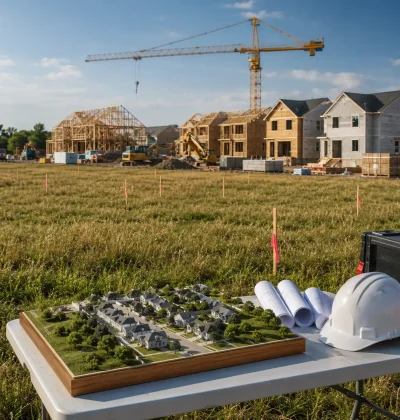
Selling land to a developer is the highest-value exit for the right parcel, and a waste of time for the wrong one. Unlike a cash buyer who flips at a discount, a developer pays for what your land can become, which is why a well-located, buildable parcel can command a premium price.
This guide breaks down exactly what a developer pays and how they calculate it, the specific things they look for before they buy, and the practical ways to find and reach them. It also tells you honestly when selling to a developer is not realistic, so you do not burn months chasing a buyer who was never coming.
Quick verdict: If your land sits in the path of growth, can be zoned or is already zoned for a use a builder wants, and can be served by utilities and access, a developer is likely your top-dollar buyer. If it is remote, unbuildable, or far from infrastructure, a developer will not touch it, and you are better off selling to another buyer type.
What Is a Land Developer, and Why Do They Pay More?
A land developer is a buyer who acquires land to build on it or improve it for resale, such as a homebuilder, a subdivider, or a commercial developer. They often pay more than other buyers because they value land by its highest and best use, the most profitable legally allowed use, rather than by what similar raw parcels recently sold for.
This is the key difference from a cash flipper. A wholesaler or cash-buyer company pays a discount to resell quickly, often around half of market value. A developer instead asks what the finished homes or building will be worth, then works backward to a land price that leaves room for profit. When your parcel unlocks a profitable project, that math can support a number far above raw-land comps.
The catch is that developers are selective and slow. They only pay a premium when the numbers work, and they walk from deals that other buyers might take. So the developer route rewards the right land handsomely and ignores the wrong land completely.
What Does a Developer Actually Pay for Land?
A developer pays the residual land value, which is the finished project’s revenue minus construction, soft costs, land-development costs, and the developer’s required profit. Whatever is left over is the most they can pay for your raw land.
Here is a simplified illustrative example, not a market quote. Say a developer can fit 10 homes on your parcel, each selling for $500,000, for $5,000,000 in revenue. Subtract construction at $250,000 per home ($2,500,000), soft costs at $40,000 per home ($400,000), land-development costs like roads and utilities ($500,000), and a 20% profit target ($1,000,000). That leaves a residual land value of about $600,000, or roughly $60,000 per lot.
Now watch how sensitive that is. If those homes sell for $450,000 instead of $500,000, the residual land value falls to about $200,000. If they sell for $550,000, it jumps to about $1,000,000. A 10% swing in the end price moved the land value five-fold. That sensitivity is exactly why two developers can hand you very different offers on the same parcel, and why knowing your land’s realistic fair market value as finished product matters more than any raw-acre comp. You can start a free trial to pull an instant estimate as a sanity check before you ever sit across from a builder.
What Do Developers Want in a Parcel?
Developers want land they can actually build on profitably, which comes down to location, zoning, utilities, access, size, and clean title. Miss any one of these and the parcel drops off their list, no matter how cheap it is.
Location leads. Developers buy in the path of growth, near existing development, jobs, and infrastructure, because that is where finished product sells. Next is zoning: the parcel must already allow the intended use or have a realistic chance of being rezoned, since zoning determines what and how much they can build. Then come utilities, since water, sewer, and power that are on-site or nearby save a developer huge cost.
Access is non-negotiable. The parcel needs legal road frontage or a recorded easement, because a landlocked parcel cannot be developed. Add adequate size for the project, developable topography and soils, no flood or wetland blockers, and clear title, and you have land a developer will compete for. The more of these boxes your parcel checks, the stronger your price.
How Do Developers Evaluate and Buy Land?
Developers evaluate land through a feasibility study and buy it with contingencies, usually tying up the parcel under an option or contract while they confirm the numbers before closing. This is slower and more conditional than a cash sale, and sellers need to expect it.
A typical process starts with a letter of intent, then a purchase agreement with a long due diligence period, often 60 to 180 days. During that window the developer studies zoning, orders soil and environmental tests, checks utility capacity, and sometimes pursues entitlements or rezoning before they are committed to buy. Many deals are structured as options, where the developer pays for the right to buy later once approvals are secured.
The trade-off is real. You may wait months and face contingencies a cash buyer would not impose, and some deals die in due diligence. In exchange, you are pursuing the highest price your land can command. Read every contingency carefully, and favor a developer who can show they have closed similar deals.
How Do You Find Developers to Buy Your Land?
You find developers by going where they already search: public building records, local builders, land brokers, and online land marketplaces. Waiting for one to knock is the slowest path, so work several channels at once, and you can get in touch with our team if you want help identifying likely developer buyers.
Start with your county. Building-permit and subdivision-plat records show exactly which developers are actively building near your parcel, and those are your warmest prospects. Local homebuilders and their land-acquisition managers are worth contacting directly, as are commercial and land brokers who specialize in development sites and already have buyer relationships. Attending planning-commission meetings tells you who is filing projects nearby.
Online exposure matters too, because many developers scan listing platforms for opportunities. Listing on a marketplace lets buyers browse land listings with the location, zoning, and acreage details they screen for. Casting a wide, well-documented net beats betting on a single broker or a single builder.
Is Selling to a Developer Right for Your Land?
Selling to a developer is right only if your parcel has genuine development potential, meaning it sits near growth, can be zoned for a wanted use, and can be served by utilities and access. For that land, a developer is usually your best-paying buyer. For everything else, it is the wrong target.
Be honest about which group you are in. A five-acre lot on the edge of an expanding suburb with road frontage and nearby sewer is a strong developer candidate. A remote 40 acres with no utilities, no paved access, and no growth for miles is not, and no amount of marketing changes that. Developers are investors running the real estate investing math, and that math simply does not close on land with no path to a profitable project.
If your parcel is not a developer fit, that is fine, it just means a different buyer. Recreational buyers, neighbors, and cash-buyer companies all purchase land that developers skip, and RawLandHub helps you reach those buyers too. Matching the land to the right buyer type is what actually gets it sold.
What Are Common Mistakes When Selling Land to a Developer?
The most common mistake is pricing your land on raw-acre comps instead of understanding its residual development value, which leaves you either overpriced and ignored or underpriced and shortchanged. Both come from not knowing how developers actually calculate offers.
Other frequent errors: not gathering the zoning, utility, and access facts a developer needs, which stalls their feasibility work and cools their interest. Accepting the first offer without competition, when a second developer with different assumptions might pay far more. Ignoring the contingencies in the contract, then being surprised when the deal is conditional and slow. And failing to vet whether the developer can actually close, which risks tying up your land for months with a buyer who never performs. Doing your homework on your parcel’s development potential before you list fixes most of these at once.
One more mistake is passive marketing. Sellers who quietly wait for a developer to appear often wait a very long time, while the parcel that actually sells is the one presented directly to buyers with the facts they need. When you list your land with the zoning, access, and utility details a builder screens for, you shift from hoping a developer stumbles across it to putting the parcel in front of many at once.
Passive sellers also tend to negotiate against a single offer, which almost always leaves money on the table. Because residual land value swings so much with a developer’s assumptions, two builders looking at the same parcel can land far apart, so running two or three interested developers against each other is often worth more than any pricing tactic. Give yourself options, and let real competition set the price.
How Should You Position and List Land for Developers?
Position your land for developers by documenting its development potential up front, then listing it where builders and brokers actually look. The goal is to make a developer’s feasibility work easy, because the easier you make their analysis, the faster and higher they bid.
Gather the evidence a developer screens for: current zoning and any rezoning precedent nearby, proximity of water, sewer, and power, legal access and frontage, a recent survey, and the growth story of the surrounding area. Present those facts clearly in your listing rather than making buyers dig. RawLandHub keeps that visibility affordable with monthly plans starting at $5, and you can create a free account with a seven-day trial and no card required.
The parcels that sell to developers fastest are the ones that arrive pre-answered. When a builder can see zoning, utilities, and access at a glance, your land moves from a maybe to a live target, and that is how you capture the development premium instead of leaving it on the table.
Frequently Asked Questions
How much do developers pay for land?
Developers pay the residual land value, which is the finished project’s expected revenue minus construction, soft costs, land-development costs, and their required profit. There is no fixed percentage of market value. A well-located, buildable parcel can sell above raw-land comps, while land with no development path is worth little to a developer regardless of size.
Do developers pay more than cash buyers for land?
Usually yes, for the right parcel. Cash-buyer companies discount to resell quickly, often near half of market value, while a developer prices land on what it can become. That premium only applies to land with real development potential. For remote or unbuildable land, a cash buyer may be the only realistic option.
How do I find developers interested in my land?
Check county building-permit and subdivision records to see who is building near you, then contact those builders and their land-acquisition managers directly. Work with land and commercial brokers who specialize in development sites, and list the parcel on a marketplace with clear zoning, utility, and access details so developers can find and screen it.
What makes land attractive to a developer?
Location in a growth path, zoning that allows or can allow the intended use, available water, sewer, and power, legal road access, adequate size, developable topography, no flood or wetland problems, and clean title. The more of these a parcel has confirmed and documented, the more attractive and valuable it is to a developer.
How long does it take to sell land to a developer?
Longer than a cash sale. Developers typically use a 60 to 180 day due diligence period to study zoning, soils, utilities, and entitlements, and some deals are structured as options that extend further. Expect contingencies and a slower close in exchange for a higher price, and confirm the developer has closed similar deals before committing.
Resources & Further Reading
- Wikipedia’s overview of highest and best use explains the appraisal principle that underpins how developers value land.
- Wikipedia’s summary of fair market value clarifies the value standard behind a developer’s residual math.
- Wikipedia’s guide to zoning covers the land-use rules that decide what a developer can build.
- Wikipedia’s article on the easement explains the legal access rights a developable parcel requires.
- Wikipedia’s overview of due diligence describes the feasibility checks a developer runs before closing.
- Wikipedia’s entry on real estate investing frames how developers approach land as an investment.