Key Takeaways
A practical guide for buyers with a low score, thin credit, or no credit who still want to own land and keep the bank out of the deal.
- Owner financing removes the bank entirely, so your credit score is rarely the deciding factor in whether you can buy.
- Most land sellers who finance care more about your down payment and steady payments than your FICO score.
- A land contract, a promissory note with a deed of trust, and a lease-to-own are the three common owner-financing structures.
- Expect a higher down payment, usually 10 to 30 percent, and an interest rate a few points above a bank loan.
- The biggest risk is a contract for deed where you get no title until paid in full, so read the default terms before you sign.
Bad credit does not lock you out of buying land the way it locks you out of a bank mortgage. Banks treat raw land as a high-risk loan and set credit bars even higher than they do for houses, so a score in the 500s or low 600s usually means an automatic no.
But land has a second market that houses barely have: sellers who finance the sale themselves. When the seller is the bank, the credit bureau is no longer in the room.
This guide is for anyone with a low score, thin credit, or no credit at all who still wants to own land, and it walks through exactly how owner financing makes that possible, what it costs, and where the traps are.
Quick verdict: If you can put money down and make steady monthly payments, you can almost certainly buy land with bad credit through owner financing. Skip the bank, find a seller who finances, and put every term in writing. The one deal to walk away from is a contract for deed with harsh forfeiture terms you do not understand. Everything else is negotiable.
Can You Really Buy Land With Bad Credit?
Yes, you can really buy land with bad credit, and owner financing is the main way people do it. Instead of applying to a bank that runs your score and underwrites the loan, you buy straight from a seller who lets you pay over time. The seller sets the terms, and most owner-sellers weigh your down payment and your ability to pay far more heavily than a three-digit number from a credit bureau.
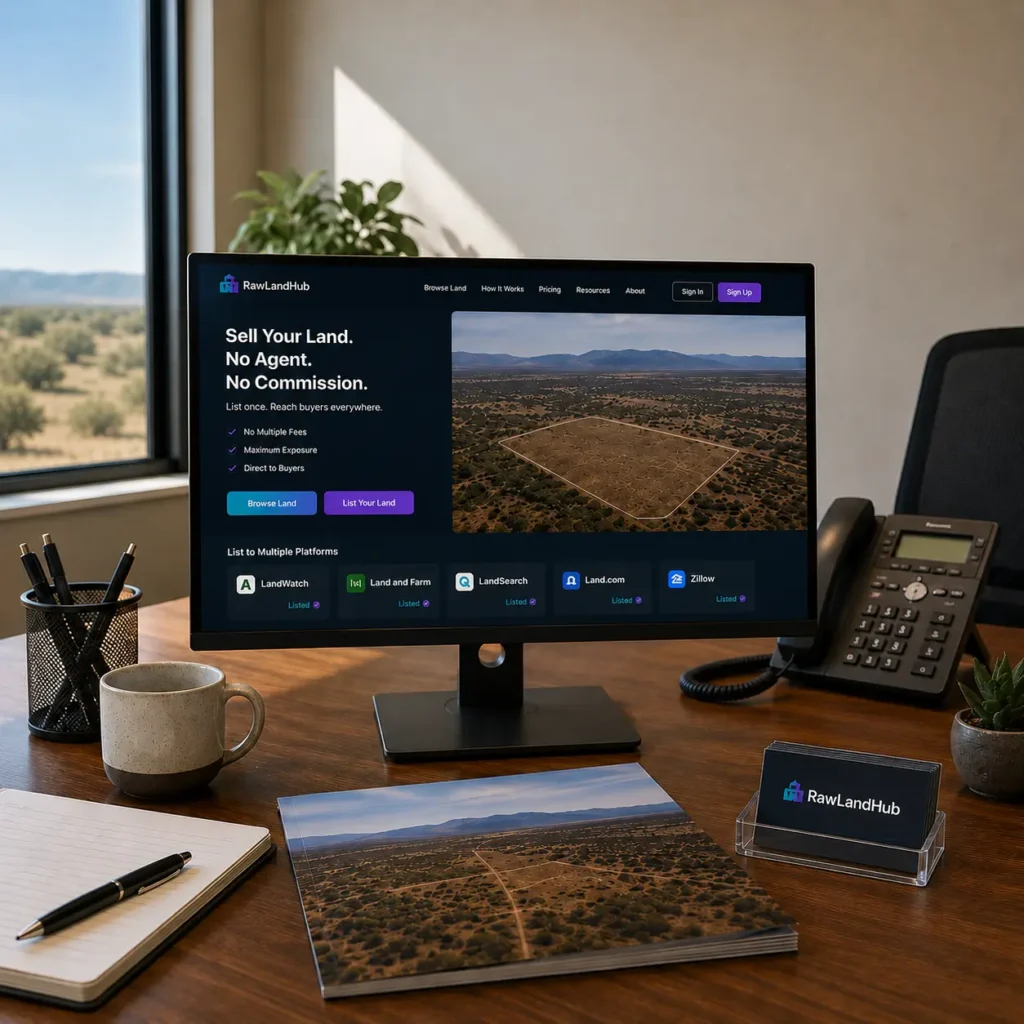
That single difference reshapes the whole deal. A bank rejects a 560 score on a land loan almost reflexively. An individual seller looking at a serious buyer with 20 percent down and a steady income often says yes to that same person. RawLandHub is built around this reality, connecting buyers directly with owner-sellers rather than routing every purchase through a lender who starts with your credit report.
What Counts as “Bad Credit” When Buying Land?
“Bad credit” generally means a FICO score below roughly 580, though for land specifically the practical cutoff runs higher. On the standard FICO scale, 300 to 579 is considered poor and 580 to 669 is fair, so a bad credit score sits in that lower band where most mainstream lenders decline.
Land raises the bar. Because a vacant parcel is harder to resell than a house if a borrower defaults, banks and credit unions that even offer land loans often want a score in the mid-600s or higher, plus a large down payment. That means a buyer with a 640 score who would qualify for a home mortgage can still be turned away for raw land. So when we talk about bad credit for land, we are really talking about anyone the traditional land-lending market pushes away, which includes plenty of people with only fair credit or no score at all. Owner financing does not draw that line, which is exactly why it matters here.
How Does Owner Financing Let You Buy Land With Bad Credit?
Owner financing lets you buy land with bad credit because the seller, not a bank, extends the credit, and sellers are free to set their own rules. In a typical owner financing deal, the buyer pays a down payment and then makes monthly payments to the seller, with interest, until the balance is paid off. No mortgage application, no bank underwriting, and usually no hard credit pull.
This works because the seller’s incentives are different from a bank’s. A bank makes money on volume and offloads risk, so it filters hard on credit scores. An individual selling a parcel wants a reliable buyer who will keep paying, and they hold the land itself as security if payments stop. If you want the full picture of how owner financing on land works before you approach a seller, it pays to understand the structure first, because a buyer who speaks the language negotiates far better terms.
What Owner Financing Options Exist for Bad-Credit Buyers?
Three owner-financing structures cover almost every land deal, and each handles title and default differently. Knowing which one a seller is offering tells you what you actually own on day one.
| Structure | Who holds title while you pay | Best for |
| Land contract (contract for deed) | Seller keeps title until paid in full | Simple deals, lowest paperwork |
| Promissory note + deed of trust/mortgage | Buyer gets title now, seller holds a lien | Buyers who want ownership up front |
| Lease-to-own (lease option) | Seller keeps title; you rent with a right to buy | Buyers not ready to commit or fund a down payment |
Under a land contract, the most common owner-financed form, you take possession and use the land immediately, but the seller keeps legal title until your final payment. That keeps the deal simple, though it also means you do not hold the deed while you pay.
A promissory note paired with a deed of trust flips that: you get title at closing and the seller records a lien, much closer to how a bank mortgage works. A contract for deed has real advantages in simplicity, but the title timing is the detail bad-credit buyers most often overlook, so confirm which structure is on the table in writing.
What Do Sellers Look at Instead of Your Credit Score?
Sellers who finance look first at your down payment, then at your ability to make the monthly payments, and finally at the land itself as their safety net. Credit score, if they check it at all, is usually the last and least important factor.
The down payment does the heavy lifting. A buyer putting 25 percent down has real money at stake and is far less likely to walk away, which is why a bigger down payment can erase a seller’s worry about a low score almost entirely. After that, sellers want evidence you can actually pay each month, so proof of steady income or cash flow carries weight. And because the seller either holds title or holds a lien, the land is their collateral: if you stop paying, they have a path to take it back. Your honest story matters too, since these are person-to-person deals, and a seller who trusts you is a seller who finances you.
What Terms and Costs Should a Bad-Credit Buyer Expect?
A bad-credit buyer should expect a higher down payment, a higher interest rate, and often a shorter term or a balloon payment than a bank would charge. The trade for skipping the credit check is that the seller prices in their own risk.
Down payments on owner-financed land commonly run 10 to 30 percent, and a weaker credit profile pushes you toward the higher end. Interest rates typically sit a few points above a comparable bank loan, reflecting the seller’s risk and the convenience. Many deals also carry a balloon payment, where you make smaller monthly payments for a few years and then owe the remaining balance in one lump sum, usually expecting to refinance or sell before it comes due.
Here is a labeled illustration, not a quote. On a $30,000 parcel with 20 percent down, you would finance $24,000. At 9 percent over 10 years, that is roughly $304 a month. If the same deal carried a 5-year balloon, you would pay that $304 monthly, then owe the remaining balance in year five. On the seller’s side, the IRS generally treats owner financing as an installment sale, and the interest you pay may have tax implications for you as well, so treat any numbers here as a starting point and confirm your own with a CPA. None of this is financial or legal advice.
How Do You Find Land With Owner Financing?
You find owner-financed land by searching marketplaces that let you filter for it and by asking FSBO sellers directly, since many will consider financing even when they do not advertise it. Owner-financed parcels are more common in land than most buyers realize, because sellers use financing to attract more buyers and often to spread out their own taxes.
Start where the listings live. Browsing owner-financed land listings on a land marketplace shows you which sellers already offer terms, and it teaches you what typical down payments and rates look like in your area.
Beyond the ones that advertise it, plenty of for-sale-by-owner sellers will say yes to financing if you ask, especially those who inherited a parcel or have owned it outright for years. As you browse land listings, reach out and ask directly, because the willingness to finance is often a conversation, not a checkbox.
What Are the Risks, and How Do You Protect Yourself?
The main risk in owner-financed land is a contract for deed where you build equity for years yet hold no title, and a single missed payment can trigger forfeiture in some states. Because these deals are private, the protections a bank closing gives you are not automatic, so you have to build them in.
Protect yourself with a few non-negotiables. Get every term in writing, including the interest rate, the payment schedule, what happens if you are late, and exactly when title transfers. Record the contract or a memorandum of it with the county so your interest is public. Run a title search before you sign to confirm the seller actually owns the land free of liens, and do the same physical and legal due diligence you would on any parcel. Using a title company or a real estate attorney to close, rather than a handshake, is the single best safeguard, and Nolo’s guide to how to protect yourself from the risks of seller financing is worth reading first.
If you are unsure whether a deal’s terms are fair, you can get in touch with our team for a second read before you commit.
What Other Ways Can You Buy Land With Bad Credit?
Owner financing is the widest door, but it is not the only one. If seller financing is not available on the parcel you want, a few other paths can still get you there.
You can spend a few months rebuilding your score before you buy, which widens your options and lowers your rate. You can bring a larger down payment to offset the credit concern, whether the lender is a seller or a bank. You can buy with a co-signer or a partner whose credit carries the deal. And for rural or agricultural land, some government-backed programs weigh your situation more flexibly than a commercial bank, though credit still counts. It is worth understanding all the ways to finance raw land so you can compare owner financing against every alternative rather than assuming it is your only shot.
Owner Financing vs. a Bank Loan vs. Rent-to-Own: Which Fits a Bad-Credit Buyer?
The three realistic paths for a bad-credit buyer differ most in whether credit is checked, how much you put down, and when you actually own the land. Here is an honest comparison.
| Factor | Owner financing | Bank / land loan | Rent-to-own (lease option) |
| Credit check | Rarely, seller decides | Yes, and strict for land | Sometimes |
| Typical down payment | 10 to 30 percent | 20 to 50 percent | An option fee, often smaller |
| Who holds title while you pay | Seller or you, depending on structure | You, with the bank’s lien | Seller until you exercise the option |
| You build equity from day one | Yes | Yes | No, not until you buy |
| Best for | Most bad-credit buyers | Fair-to-good credit only | Buyers not ready to commit |
Owner financing wins for most bad-credit buyers because it is the only path where a low score is rarely the gatekeeper. A bank loan is cheaper if you can qualify, but land lending is exactly where thin credit gets rejected. Rent-to-own can bridge you toward ownership, though you own nothing until you exercise the option, so read that contract as carefully as any other.
Common Mistakes Bad-Credit Land Buyers Make
Most owner-financing deals that go wrong trace back to a handful of avoidable errors: offering too little down and getting a no from a seller who needed to see commitment, failing to get every term in writing, and never reading the default or forfeiture clause that decides what happens if you miss a payment. Buyers also skip the title search and due diligence because the seller seems friendly, agree to a balloon payment they have no realistic way to refinance, and assume the payments are building their credit when most individual sellers never report to the bureaus. Avoid those six, and you are ahead of nearly every other bad-credit buyer chasing the same parcels.
Should You Buy Land With Bad Credit?
Yes. If you can put money down and keep up the monthly payments, buying land with bad credit through owner financing is not only possible, it is usually the smart move. Bad credit is a wall at the bank, but it is a much lower hurdle in the owner-financed market, where a real person, not a credit algorithm, decides whether to sell to you. Bring a solid down payment, prove you can pay, do your due diligence, and get every term in writing, and a low score stops defining what you can own. The buyers who win here treat it as a search for the right seller, not a plea to a lender. RawLandHub keeps that search affordable with monthly plans starting at $5, and you can create a free account with a seven-day trial and no card required to start browsing owner-financed parcels today.
Frequently Asked Questions
What credit score do you need to buy land with owner financing?
There is no fixed minimum, because the seller sets the terms, not a bank. Many owner-financed land deals involve no credit check at all. Sellers usually focus on your down payment and your ability to make monthly payments, so a strong down payment can matter far more than your score.
Is owner financing the same as rent-to-own?
No. With owner financing you are buying the land and building equity from day one, with the seller acting as your lender. Rent-to-own, or a lease option, means you rent the land with a right to buy it later, and you typically own nothing until you exercise that option and close the purchase.
Can you buy land with no credit check?
Yes. Owner financing frequently involves no credit check, since the seller is extending the credit and can decide what matters to them. This makes it one of the few realistic ways to buy real estate with no score or a very low one, provided you can put money down and keep up the payments.
Does owner financing help or hurt your credit?
Usually neither, because most individual sellers do not report your payments to the credit bureaus. That means an owner-financed purchase generally will not build your credit the way a reported mortgage would, though it also will not show up as a hard inquiry. Ask the seller directly whether they report payments.
Resources & Further Reading
- Investopedia’s overview of owner financing explains how a seller-financed purchase works and its trade-offs.
- Experian’s guide to a bad credit score defines the FICO ranges that lenders treat as poor and fair.
- Nolo’s explainer on the basics of land contracts covers how a contract for deed handles title and payments.
- The IRS overview of installment sales describes how owner-financed sales are taxed for the seller.
- Nolo’s guide to the risks of seller financing shows a buyer how to protect themselves in a private deal.
- Wikipedia’s overview of the balloon payment explains the lump-sum structure common in owner-financed land.