Key Takeaways
An argument for why vacant land has always been the hardest asset to price, and how AI is quietly closing the data gap that held it back.
- Land has no equivalent of the housing MLS, so its data is scattered across thousands of counties and rarely standardized.
- That fragmentation, not a shortage of buyers, is the real reason land is slow to sell and easy to misprice.
- AI closes the gap by aggregating public records and pricing parcels that never had usable comparable sales.
- The honest limit: AI is a first screen, not a verdict, and rural data deserts still require boots on the ground.
- The winners in land will be the platforms that aggregate the data and apply AI to it, not the ones with the biggest ad budget.
The land market has a data problem that the housing market solved twenty years ago. If you have ever tried to answer a simple question, what is this vacant parcel actually worth, you already know the feeling: no clean comps, a county assessment that means nothing for sale price, and a dozen listing sites that each show a sliver of the market.
That is not bad luck. It is a structural information gap baked into how land data is collected, and it is the single biggest reason land sits unsold and trades at the wrong price. This piece makes the case that AI is finally closing that gap, explains exactly how, and is honest about where it still falls short.
Quick verdict: Land has always been priced on guesswork because the data was never good enough to price it any other way. AI does not magically make every parcel liquid, but for the first time it turns scattered public records into a usable picture of value. If you buy or sell land, the practical takeaway is simple: the information edge that professionals hoarded is becoming available to everyone.
Why Does the Land Market Have a Data Problem?
The land market has a data problem because there is no single, standardized system that records what parcels are worth or what they sell for. Housing has the MLS, national portals, and decades of clean transaction data. Land has none of that, and the result is a persistent information asymmetry where one side of almost every deal knows far more than the other.
Call it the land data gap. Ownership and sale records live in more than 3,000 separate county systems, each with its own format, few of them fully digitized. Comparable sales are thin because parcels are unique and trade infrequently. The county’s assessed value exists for taxation, not pricing, so it is often a fraction of market value or years out of date. Stitch those problems together and you get a market where nobody can easily see the truth.
That gap has a cost, and economists named it long ago. When one party holds better information, transactions turn inefficient and the market itself can fail, which is exactly Akerlof’s insight about markets for hard-to-value goods. In land, the person with better data does not just win the negotiation. They set the price.
How Is Land Different From the Housing Market?
Land is different because every structural advantage the housing market enjoys, land lacks. A house sits on a street with dozens of near-identical neighbors that sold recently, feeding a constant stream of clean comps into automated tools. A five-acre parcel may have no true comparable within miles and no sale on record for a decade.
Speed shows the gap plainly. The typical US home sells in roughly 52 days on market, supported by that dense data and a mature listing system. Vacant land routinely takes far longer, often several months to well over a year, and a large part of that delay is simply the time it takes buyers and sellers to figure out what the parcel is worth and whether it is even usable.
Here is the insider observation most buyers never hear. Land is not slow and opaque because demand is weak. It is slow and opaque because the information layer that makes housing efficient was never built for land. Fix the data, and much of the friction disappears.
How Is AI Closing the Land Data Gap?
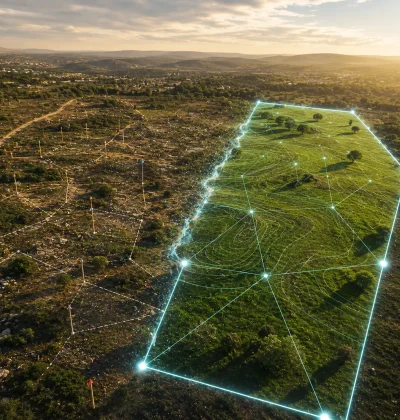
AI is closing the gap first by aggregation, pulling the scattered public record into one machine-readable picture of a parcel. The raw material was always there in county and federal databases. What was missing was a way to collect, clean, and connect it at scale, and that is precisely what machine learning systems are built to do.
Modern tools ingest parcel boundaries and ownership from county records, overlay them with a geographic information system that maps flood zones, terrain, and zoning, and pull in federal datasets that were previously buried. Environmental data is a good example: a model can now reference the USDA’s Web Soil Survey to factor soil and agricultural capability into a parcel’s profile automatically, something no casual buyer would ever do by hand.
The shift is subtle but enormous. Data that used to require a title company, a surveyor, and days of research now assembles in seconds. That does not replace due diligence, but it means a buyer or seller starts from a real picture instead of a blank page.
How Is AI Pricing Land That Was Never Priceable?
AI prices previously unpriceable land by using machine learning to find patterns across thousands of parcels instead of relying on a handful of local comps. Where a human appraiser needs three similar recent sales, a model can learn how acreage, access, zoning, and location relate to value across an entire region and apply that to a parcel with no direct comparable.
This is the same class of technology, the automated valuation model, that has produced instant home estimates for years, now pointed at land. It works because machine learning generalizes from data it has seen to cases it has not, which is exactly the problem land always posed. The estimate is not perfect, but a data-driven starting range beats the shrug that used to be the honest answer.
For the first time, an owner of a remote parcel can get a defensible number in seconds, and a buyer can sanity-check an asking price without hiring anyone. The information edge is no longer locked behind professional access.
What Does Closing the Data Gap Change for Buyers and Sellers?
Closing the data gap changes the balance of power, giving both sides of a land deal something close to the same picture for the first time. When a seller and a buyer can both see comparable-driven value, zoning, and access up front, negotiations start from evidence instead of bluff, and deals close faster.
For sellers, it means pricing on real market data rather than a tax assessment or a hopeful guess, which is the difference between a parcel that sells and one that sits. For buyers, it means spotting both bargains and overpriced listings quickly, which you can do the moment you browse land listings that show the location and zoning detail that used to take days to assemble. The friction that made land feel risky was mostly missing information.
This is where a platform earns its keep. You can start a free trial and see an instant estimate on a parcel that, a few years ago, no tool could have valued at all. The technology does not create demand out of nothing, but it removes the fog that kept willing buyers and sellers from finding a fair price.
What Can AI Still Not Fix in the Land Market?
AI cannot fix the parts of the land market where the underlying data simply does not exist or where only a physical visit reveals the truth. This is the honest limit, and any credible case for AI in land has to name it. A model is only as good as the records it can reach, and in much of rural America those records are thin.
Remote counties are data deserts, with few recent sales and spotty digitization, so estimates there carry real uncertainty. Truly unique parcels defy pattern-matching by definition. And no algorithm can walk the property to check whether the access road washes out, the boundary is disputed, or the perc test will fail, all of which decide real value. Garbage in still means garbage out.
So treat AI as a powerful first screen, not a verdict. I will not pretend the data gap closes evenly or overnight. It closes fastest where parcels are numerous and records are digitized, and slowest in exactly the remote places where land is cheapest. The technology narrows the gap; it does not erase the need for human judgment on the ground.
There is a second limit worth naming, because it is the one experts miss. A model can inherit the market’s own blind spots. If the comparable sales in a county were themselves mispriced by years of opacity, a system trained on them will confidently repeat the error. Better data narrows this over time, but an early estimate in a thin market should be read as a hypothesis to test, not a fact to trust. The goal was never a perfect number. It is a defensible starting point where there used to be none, and knowing the difference is what separates a useful tool from a dangerous one.
Where Does the Land Market Go From Here?
The land market is heading toward the same transparency housing already has, just fifteen years behind and arriving all at once. As more county records digitize and more sales feed the models, land estimates will get sharper, appear on every listing, and stop being a specialist’s guess. If you want help pricing a parcel on that data today, you can get in touch with our team.
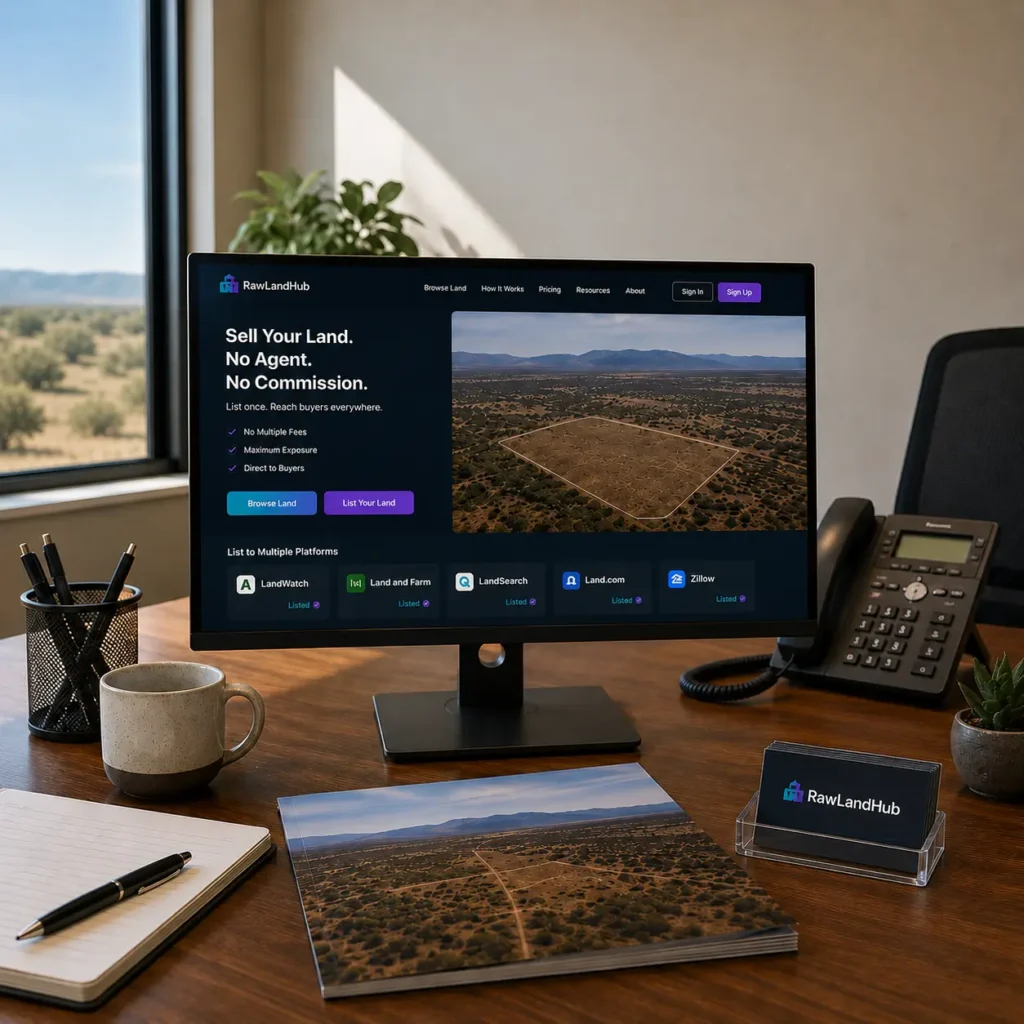
My prediction is specific: within a few years, pricing a parcel from live data will be as routine as checking a home estimate is today, and the sellers who cling to the old opacity will lose to those who price on evidence. The advantage will not go to whoever shouts loudest. It will go to the platforms that do the unglamorous work of aggregating the data and applying AI to it, which is the whole thesis behind RawLandHub. Sellers who list your land with clear, data-backed detail will be the ones buyers trust.
The land data gap is not a permanent feature of the market. It was an accident of history, a market that grew up without the infrastructure housing was given, and that accident is finally being corrected.
What Does This Mean If You Are Buying or Selling Land Now?
If you are in the market today, it means the information advantage that used to belong only to insiders is now available to you, and using it is the single highest-leverage thing you can do. Price on data, verify on the ground, and do not let anyone with better information set your number for you.
For sellers, start with a data-driven estimate, then document access, zoning, and utilities so buyers can see what you see. For buyers, use the estimate to filter and negotiate, then do the physical due diligence AI cannot. RawLandHub is built for exactly this moment, with monthly plans starting at $5, and you can create a free account with a seven-day trial and no card required.
The land market spent decades as one of the last major asset classes running on guesswork. That era is ending. The people who win the next one will be the ones who treat land data as something you can finally trust.
Frequently Asked Questions
Why is vacant land so hard to price?
Vacant land is hard to price because it lacks the clean, standardized sales data that housing has. There is no unified MLS for land, records are scattered across thousands of counties, comparable sales are rare because parcels are unique, and the county assessed value reflects taxation, not market price. That missing data, not a lack of demand, is the core problem.
Is AI land valuation accurate enough to trust?
AI land valuation is accurate enough to use as a starting point, not a final answer. For parcels with good data and nearby sales, estimates land in a useful range. In remote areas with thin records, uncertainty rises sharply. Treat any automated land value as a first screen, then confirm it with local comps, an appraisal, and physical due diligence.
Does AI replace appraisers and due diligence for land?
No. AI aggregates data and produces fast estimates, but it cannot inspect the property, verify legal access, or take professional responsibility for a value. Appraisers and on-the-ground due diligence remain essential, especially for loans, legal matters, and any parcel where access, zoning, or environmental issues could change what the land is actually worth.
Why does land take so long to sell compared to houses?
Land takes longer largely because of its data problem. Buyers cannot quickly confirm value, zoning, access, or buildability, so deals stall during research that a house buyer skips. The typical US home sells in around 52 days, while vacant land routinely takes several months or more. Better data and clearer listings are what shorten that timeline.
Resources & Further Reading
- Wikipedia’s overview of information asymmetry explains how unequal information causes market inefficiency, the core of land’s data problem.
- The Federal Reserve’s median days on market series tracks how long homes take to sell, a benchmark land lags well behind.
- Wikipedia’s overview of the geographic information system describes the spatial data layers AI uses to profile a parcel.
- The USDA’s Web Soil Survey is a public dataset AI can pull to factor soil and land capability into value.
- Wikipedia’s article on the automated valuation model explains the technology now bringing instant estimates to land.
- Wikipedia’s overview of machine learning defines the pattern-finding that lets models price parcels without direct comps.