Key Takeaways
A complete, plain-English guide to owner financing on land for both buyers who cannot get a bank loan and sellers who want to sell faster.
- With owner financing, the seller becomes the lender and the buyer pays them over time, with no bank involved.
- Two structures are common: a land contract, where the seller keeps title until paid off, and a promissory note with a deed of trust, where the buyer gets title and the seller holds a lien.
- Typical land terms are 10% to 20% down, 6% to 10% interest, and a 5 to 15 year term, all negotiated directly.
- Owner financing raw land is legally simpler than financing a home because Dodd-Frank’s owner-financing rules do not apply to vacant land.
- Sellers can reach up to three times more buyers and earn interest, while buyers skip bank approval, so both sides win when the contract is written clearly.
Most banks will not lend on raw, unimproved land, which locks millions of buyers out of the market and leaves sellers waiting on cash buyers who never call. Owner financing on land fixes both problems at once by letting the seller carry the loan. This guide explains exactly what owner financing on land is, how it works for buyers and sellers, the terms to expect, the legal and tax rules, and the risks each side should plan for. By the end you will know whether it fits your situation and how to set it up safely.
Quick verdict: Owner financing is a strong fit for buyers who cannot get a bank loan on raw land and for sellers who want to sell faster and earn interest. It works best on clear-title parcels with a written contract and attorney review. Avoid it if you need a full cash payout now, or if either side will not put the terms in writing.
What Is Owner Financing on Land?
Owner financing, also called seller financing, is a deal where the seller lends the purchase price to the buyer instead of a bank. The buyer takes possession, makes a down payment, and pays the balance in installments over time.
In a normal sale, a bank hands the seller cash and the buyer repays the bank. With owner financing, the bank disappears from the middle. The buyer pays the seller directly on an agreed schedule, usually monthly, with interest. When the balance is paid off, the buyer owns the land free and clear.
This matters most for land because banks treat raw parcels as risky collateral and often refuse to finance them. Owner financing removes that barrier, which is why it is far more common in land deals than in traditional home sales.
How Does Owner Financing on Land Work?
The process is straightforward once both sides agree on terms. Here is the typical flow from handshake to final payment.
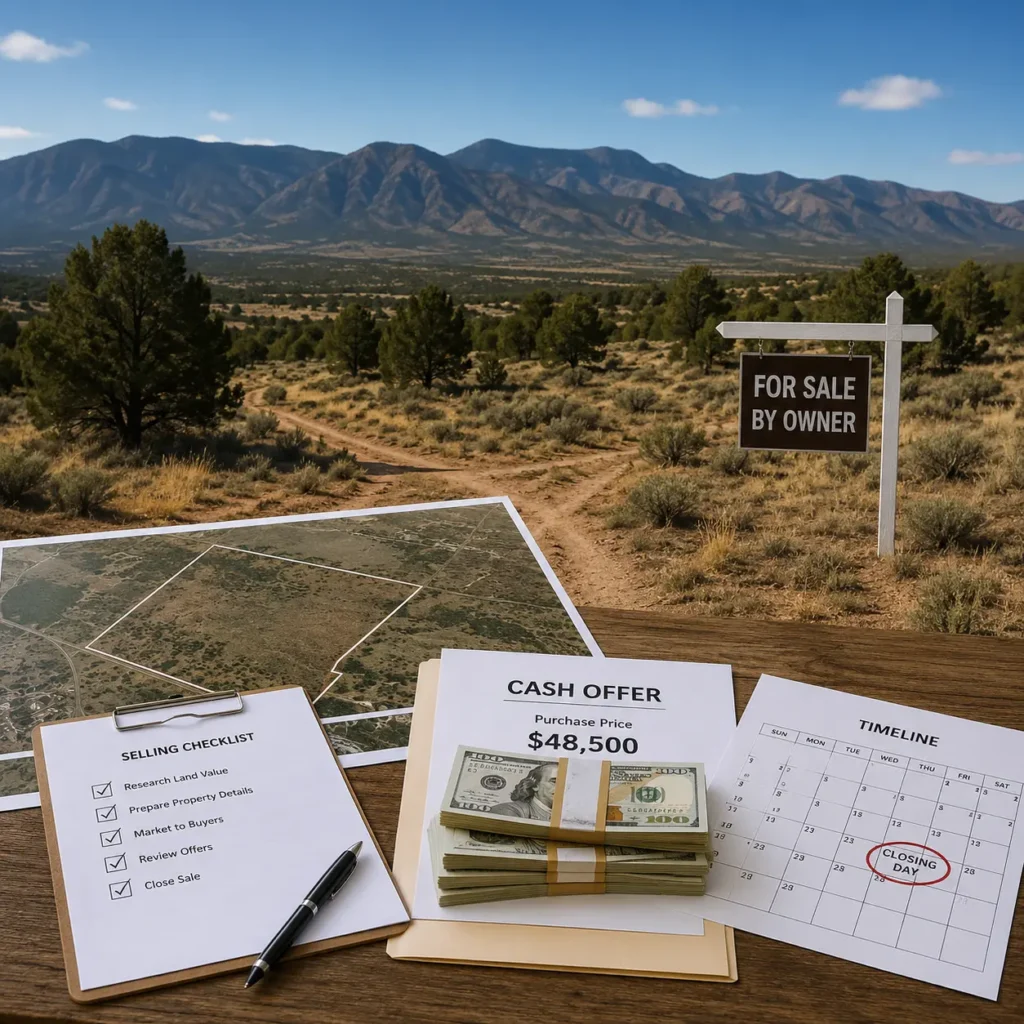
First, the buyer and seller negotiate the price, down payment, interest rate, term length, and monthly payment. Second, they sign a written contract that spells out every term, and the buyer pays the down payment. Third, the buyer takes possession and makes monthly payments to the seller, usually including principal and interest. Finally, once the balance is paid, the seller delivers a clear deed and the buyer owns the parcel outright.
Everything hinges on the paperwork. A verbal owner-financing deal is a lawsuit waiting to happen, so both sides should use a written agreement and have a real estate attorney review it before any money changes hands.
Land Contract vs. Promissory Note: Two Ways to Structure It
Owner financing on land is usually structured one of two ways, and the difference comes down to who holds legal title while the buyer pays.
| Feature | Land Contract (Contract for Deed) | Promissory Note + Deed of Trust/Mortgage |
| Who holds legal title until payoff | Seller | Buyer (seller holds a lien) |
| What the buyer gets upfront | Equitable title and possession | Legal title and possession |
| Common default remedy | Forfeiture (varies by state) | Foreclosure |
| What gets recorded | The contract | The deed plus the lien |
With a land contract, the seller keeps the deed until the final payment, which gives the seller more control but gives the buyer less protection. With a note and deed of trust, title transfers at closing and the seller holds a lien, much like a bank mortgage. The Federal Reserve Bank of Minneapolis has documented real risks for buyers under contract-for-deed arrangements, so buyers in particular should understand which structure they are signing.
Typical Owner Financing Terms for Land
There is no fixed formula, but land deals tend to cluster around a common set of terms that both sides negotiate directly.
- Down payment: commonly 10% to 20% of the price, though it is fully negotiable.
- Interest rate: commonly 6% to 10%, set by the seller and subject to state usury limits.
- Term length: commonly 5 to 15 years, sometimes with a balloon payment at the end.
- Payment: usually a fixed monthly amount covering principal and interest.
A larger down payment lowers the seller’s risk and often earns the buyer a better rate. A shorter term with a balloon lets a seller cash out sooner, while a longer amortized term keeps monthly payments affordable for the buyer. The right mix depends on what each side needs.
Owner Financing for Buyers: Pros and Cons
For buyers, owner financing is often the only realistic path to owning raw land. It also carries real trade-offs worth understanding first.
The upside is access. There is no bank approval, no lengthy underwriting, and often no strict credit check, so buyers who cannot qualify for a traditional loan can still purchase. Down payments and terms are negotiable, and closing is usually faster and cheaper than a bank deal. Buyers looking for these deals can browse owner-financed land listings filtered for exactly this option.
The downside is risk and cost. Interest rates are often higher than a bank’s, and under a land contract the buyer does not hold legal title until the balance is paid, so missing payments can mean losing both the land and the money already paid. Read the default terms carefully and confirm the seller actually owns clear title before signing.
Owner Financing for Sellers: Pros and Cons
For sellers, owner financing is a powerful way to sell faster and earn more, but it means becoming a lender rather than getting paid in full today.
The upside is demand and income. Offering owner financing can expand your buyer pool by up to three times, because it opens the door to everyone the banks turned away. You earn interest on top of the sale price, your parcel often sells faster, and you can spread your taxable gain over years. Sellers who want to offer it can list your land with clear financing terms and reach motivated buyers directly.
The downside is that you do not get a full cash payout upfront, and you take on the risk that a buyer stops paying. You also have to manage payments and recordkeeping. Requiring a solid down payment and using a clear written contract are the two best ways to protect yourself.
Is Owner Financing on Land Legal? The Rules Explained
Yes, owner financing on land is legal in all 50 states, and financing raw land is actually simpler than financing a home. The key reason is a federal law most sellers worry about needlessly.
The Dodd-Frank Act added consumer-protection rules for owner-financed sales, but those rules apply only to loans secured by a residential dwelling. Vacant land with no home on it is not a dwelling, so Dodd-Frank’s ability-to-repay and loan-originator requirements generally do not apply to raw parcels. That removes a major layer of complexity from land deals.
This does not mean anything goes. State land-contract statutes, usury limits, and general contract law still apply, and the picture can change if the buyer plans to build a primary home. Because rules vary by state, both sides should use a written contract and have a real estate attorney review it. Nolo’s overview of how land contracts work is a useful starting point before you talk to a lawyer.
What Happens If the Buyer Defaults?
Default is the risk sellers fear most, and the remedy depends on how the deal was structured and which state the land is in. Plan for it in the contract, not after.
Under a land contract, the seller’s remedy is often forfeiture, meaning the buyer loses the land and prior payments, though many states now require a foreclosure-style process instead. Under a note and deed of trust, the seller forecloses on the lien, similar to a bank. Either way, the contract should spell out the grace period, late fees, notice requirements, and the exact steps on default.
A meaningful down payment is the seller’s best protection, because a buyer with real money at stake is far less likely to walk away. Buyers, in turn, should confirm the default terms are fair and legal in their state before signing.
How Are Taxes Handled on Owner-Financed Land?
Owner financing changes how and when the seller pays tax, and it can work in the seller’s favor. This is general information, not tax advice, so confirm with a CPA.
Because payments arrive over several years, the seller can usually use the IRS installment-sale rules to report the capital gain gradually as payments come in, rather than all at once, using Form 6252. The interest portion of each payment is taxed as ordinary income. The IRS also requires the contract to charge adequate stated interest, so the note has to use a reasonable rate rather than zero.
For buyers, interest paid on raw land is generally not deductible the way home-mortgage interest is, so factor that in. A short talk with a tax professional before closing helps both sides structure the deal correctly.
How to Find or Offer Owner-Financed Land
Whether you want to buy on terms or sell on terms, the key is reaching the other side directly. This is where the right platform saves months.
Buyers should search a dedicated AI-powered land marketplace where owner-financed parcels are clearly labeled and filterable, instead of scrolling generic portals that bury them. Sellers can generate payment schedules and a basic contract template, then publish with an owner-financing badge that consistently earns more clicks. Those seller tools are included on the paid plans, which start at a few dollars a month, and you can create your free account to test everything during the trial.
The goal on both sides is the same: connect a buyer who needs terms with a seller willing to offer them, without a bank in the middle.
Who Should Avoid Owner Financing on Land?
Owner financing is not right for everyone, and honesty here saves both sides pain. Skip it in a few clear cases.
Sellers who need the full sale price in cash right now, for a purchase or a debt, should hold out for a cash buyer instead. Buyers who can qualify for a low-rate bank or USDA land loan may pay less that way over time. And anyone unwilling to sign a detailed written contract should walk away, because a handshake owner-financing deal protects no one.
For everyone else, owner financing on land is a proven way to close deals that banks would block. When you are ready to buy or sell on terms, you can start free today and connect with the right side of the deal.
Frequently Asked Questions
How does owner financing on land work?
The seller acts as the lender. The buyer makes a down payment and monthly payments directly to the seller under a written contract, with interest, over an agreed term. When the balance is paid off, the buyer receives a clear deed. No bank is involved, and terms are negotiated directly between the two parties.
Do you need good credit for owner-financed land?
Usually not. Most owner-financing sellers do not run strict credit checks, which is a major reason buyers choose it. The seller may still ask about income or require a larger down payment to offset risk, but there is no bank underwriting, so buyers with weak or no credit can often still qualify.
Is owner financing on land legal?
Yes, in all 50 states. Because Dodd-Frank’s owner-financing rules apply only to residential dwellings, they generally do not apply to vacant land, which makes raw-land deals simpler. State land-contract statutes, usury limits, and contract law still apply, so both sides should use a written agreement reviewed by a real estate attorney.
What is the typical down payment for owner-financed land?
Down payments commonly range from 10% to 20% of the purchase price, but everything is negotiable. A larger down payment lowers the seller’s risk and often earns the buyer a lower interest rate, while a smaller down payment keeps upfront cost low. The seller sets the requirement and the two sides negotiate.
What happens if I stop paying on owner-financed land?
It depends on the structure and your state. Under a land contract you can face forfeiture and lose the land plus prior payments, though many states require a foreclosure-style process. Under a deed of trust, the seller forecloses on the lien. Always read the default and cure terms before signing.
Resources & Further Reading
- Investopedia explains the basics of owner financing, including how it works and its advantages and drawbacks.
- The IRS guide to installment sales covers how sellers report gain over time on Form 6252.
- The Federal Reserve Bank of Minneapolis details the risks of the contract for deed for buyers.
- Nolo breaks down how land contracts work, including title, payments, and default.
- This overview of seller financing covers the concept across real estate.
- This explainer on the land contract describes how contract-for-deed arrangements are structured.