Key Takeaways
A practical roadmap for landowners who want to sell a vacant parcel by owner, keep the full sale price, and still close cleanly.
- A 5-6% commission on a $100,000 parcel is $5,000 to $6,000, money most land agents never earn back in results.
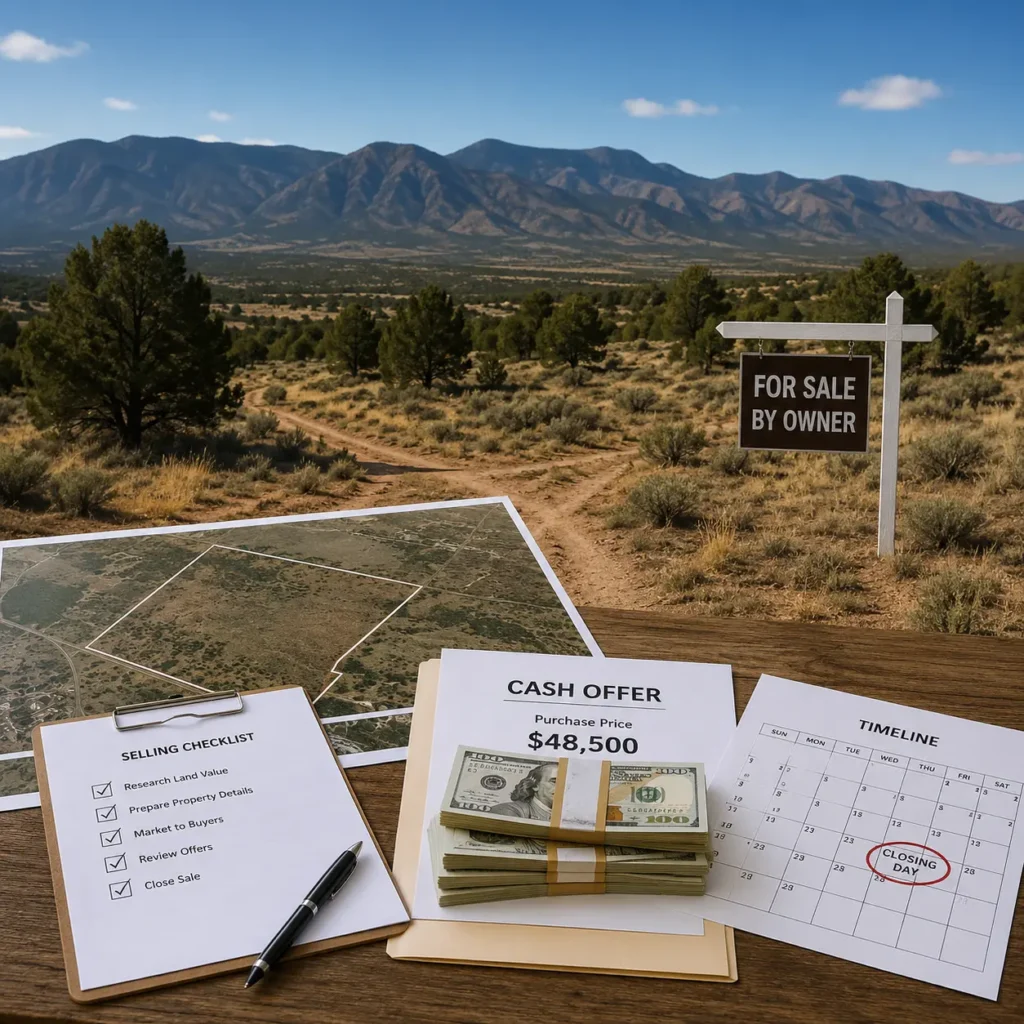
- The process is eight clear steps: gather parcel details, price with comps, verify access and zoning, write the listing, list where land buyers search, market it, sign the contract, and close through a title company.
- Land buyers do not shop on house portals, so a dedicated vacant land marketplace puts your parcel in front of people who are actually looking.
- Offering owner financing can grow your buyer pool up to 3x, and IRS installment-sale rules let you spread the tax over time.
- Selling by owner fits most parcels, but not clouded titles, boundary disputes, or owners who cannot handle buyer communication.
Selling raw land is not the same as selling a house, and that one fact is why so many owners overpay agents for weak results. Most agents were never built to price, market, or move a parcel of dirt. Learning how to sell vacant land without a realtor is one of the highest-return moves a landowner can make in 2026. This guide walks through the full process, from pricing and paperwork to listing, offers, closing, and taxes, using the same steps owners use to sell fast and keep every dollar.
Quick verdict: Selling land yourself is legal in all 50 states and usually the smart choice. Land is simpler to sell than a home, and agents rarely add 6% of value to a parcel. Do it yourself if you can price accurately, disclose honestly, and answer buyers quickly. Hire an agent only if your land is high-value, legally complex, or you truly cannot manage inquiries.
Can You Legally Sell Vacant Land Without a Realtor?
Yes. In every U.S. state, a property owner can sell their own real estate without a licensed agent. This is called a for-sale-by-owner (FSBO) transaction, and it is completely legal for vacant land.
The only hard requirements are a valid written purchase agreement between you and the buyer, plus a proper transfer of title, which almost always runs through a title company or real estate attorney. You do not need a broker’s license to sell property you already own. Millions of owners list land by owner every year, and land is one of the easiest kinds of real estate to sell yourself because there is no house to stage, inspect, or repair.
What you are really deciding is not whether you are allowed to. You are. The real question is whether you want to keep the commission and run the process yourself. For most parcels, the answer is a clear yes.
Why Selling Land Is Different From Selling a House
Vacant land is a different asset class, and treating it like a house is the most expensive mistake sellers make.
A house sells on emotion, square footage, school districts, and comparable home sales. Land sells on access, acreage, zoning, terrain, water, and price per acre. The buyer pool is different too. Land buyers are investors, homesteaders, hunters, farmers, builders, and developers, not families scrolling listings on a Saturday.
Most agents have no land-specific experience. They have no comparable-sales database for raw parcels, no buyer network looking for acreage, and no reliable way to price by the acre. So they post your land on a house portal under “Land/Lots,” add two blurry photos, and wait. National Association of Realtors data shows that 40% of FSBO sellers never actively market their property, and plenty of agents do not market land well either. You often pay full commission for below-average effort on an asset the agent does not understand.
How Much Does a Realtor Actually Cost You?
A standard real estate commission runs 5-6% of the sale price, and on land that is pure profit walking out the door.
Since the August 2024 NAR settlement, commissions are fully negotiable and no longer posted on the MLS, but 5-6% is still common. Here is what that costs on a typical parcel:
| Sale Price | 6% Agent Commission | 5% Agent Commission | You Keep (FSBO) |
| $25,000 | $1,500 | $1,250 | Full price |
| $50,000 | $3,000 | $2,500 | Full price |
| $100,000 | $6,000 | $5,000 | Full price |
| $200,000 | $12,000 | $10,000 | Full price |
For comparison, listing on a purpose-built land platform with flat monthly pricing costs a fraction of a single commission, often under $200 for a full year. That is the core math behind selling without a realtor: you keep thousands of dollars that an agent rarely earns back on raw land.
Step 1: Gather Your Parcel Details and Paperwork
Before you price or list anything, pull together the documents that prove what you own and define exactly what you are selling.
You will want your parcel’s APN (Assessor’s Parcel Number), the legal description, and a copy of your current deed showing clear ownership. Your APN is on your county property tax bill or your recorded deed, and most county assessor websites offer a free parcel lookup. Also gather any survey, plat map, and tax records, plus the type of deed you plan to transfer. A warranty deed gives buyers the strongest protection, while a quitclaim gives the least.
Having this ready upfront does two things. It lets you answer buyer questions instantly, and it prevents last-minute closing delays. Buyers who get fast, complete answers trust the seller, and trust closes deals.
Step 2: Price Your Vacant Land Accurately
Pricing is the single biggest factor in whether your land sells in weeks or sits for a year. Overpricing is the number-one reason land does not move.
Start with comparable sales, or comps. Find recently sold vacant parcels near yours with similar acreage, access, and zoning, then calculate their price per acre. County recorder and assessor records show sold prices for free. Adjust for your parcel’s strengths and weaknesses. Paved road access, utilities, water, and buildable terrain push value up, while landlocked access or flood risk push it down.
If you want a faster, data-backed starting point, an AI valuation tool can pull comps and weigh dozens of parcel factors in seconds. Owners who price within an accurate range consistently sell faster than those who guess or anchor to an agent’s off-the-cuff number. When you are ready to test your price against real demand, you can list your land and watch how buyers respond.
Step 3: Verify Access, Zoning, and Flood Status
Buyers do their own due diligence, so do it first, before a surprise kills your deal three weeks in.
Check three things before you list. First, road access: is the parcel on a paved road, a dirt road, or legally landlocked? Landlocked parcels need a recorded easement for access, and hiding that only costs you the sale later. Second, zoning: confirm the designation with your county planning department instead of assuming. Third, flood risk: look up your parcel on the FEMA Flood Map Service Center to see its flood zone before a buyer does.
Disclose everything you find. Transparent listings build trust, attract the right buyers, and prevent the deal-killing surprises that waste weeks and scare off backup offers.
Step 4: Write a Land Listing That Attracts Real Buyers
Most FSBO land listings read like a tax record: “22.4 acres, APN 142-XX-123, zoned AG.” That is data, not a listing, and buyers scroll right past it.
A listing that converts tells the story of the land. Lead with the feature most likely to hook your target buyer, describe what it feels like to stand on the property, and explain the opportunity, whether that is build, farm, hunt, homestead, or hold. Naturally include the terms buyers search for: acreage, county, state, owner financing, road access, off-grid. Then add real photos and, ideally, a simple map or drone shot.
If writing is not your strength, an AI listing tool can turn raw parcel data into buyer-focused copy in seconds. Either way the goal is the same: give a serious buyer enough to picture owning it, and enough keywords for search engines and AI assistants to surface it.
Step 5: List Where Land Buyers Actually Search
This is where selling land without a realtor is won or lost. Your parcel has to show up where land buyers are looking, and that is rarely a house portal.
Zillow, Realtor.com, and Facebook Marketplace were built for homes and general resale, so land listings get buried, bots crowd your inbox, and qualified buyers cannot find you. A better route is a dedicated AI-powered land marketplace where every visitor is specifically searching for vacant land and filtering by state, acreage, price, and financing. You can create your free listing in minutes and reach buyers who came looking for exactly what you own.
List in more than one place if you like. There is no exclusivity when you sell by owner. But prioritize the platforms built for land, because reach without relevance just wastes your time.
Step 6: Market Your Parcel and Widen the Buyer Pool
Publishing a listing is not marketing. It is the starting line. A little promotion and one smart offer can sharply cut your time to sale.
Share your listing in relevant social channels and land-buying groups, and consider two proven accelerators. First, offer owner financing. Most banks will not finance raw land, so seller financing removes that barrier and can grow your buyer pool up to 3x, while you earn interest on top of the price. Second, keep your response time short. Buyers contact several sellers at once, and the first to reply usually wins the deal.
The more qualified eyes you get on an accurately priced, well-disclosed parcel, the faster it sells. That is the whole game.
Step 7: Handle Offers, Negotiation, and the Purchase Agreement
When a buyer is ready, everything gets put in writing. A verbal deal on land is not a deal.
Negotiate the essentials directly: price, cash or owner financing, contingencies, closing timeline, and who pays which closing costs. Then execute a written purchase and sale agreement with earnest money deposited with the title company or attorney. Earnest money matters. Without a signed contract and deposit, a buyer can walk away with zero consequence. With them, the buyer faces defined penalties for backing out.
You can start from a standard vacant-land purchase agreement template, but for higher-value parcels, have a real estate attorney review it. This is the one step where a little professional help is worth it, and it still costs far less than a full commission.
Step 8: Close the Sale Through a Title Company or Attorney
Closing is where ownership legally transfers, and it is simpler for land than for a house.
In most states, buyer and seller use a title company, or a real estate attorney in attorney-closing states, to handle the title search, title insurance, deed preparation, and recording. The title company confirms you can convey clear title, prepares the deed, collects and disburses funds, and records the transfer with the county. You sign, the buyer pays, and the deed is recorded.
At closing, the settlement agent typically files a Form 1099-S reporting the sale to the IRS, so keep it for your tax records. Once the deed records, the land is the buyer’s and the proceeds are yours, with no commission deducted.
What About Taxes When You Sell Land?
Selling land is a taxable event, and planning for it protects your profit. This is general information, not tax advice, so confirm your situation with a CPA.
When you sell for more than your cost basis, you usually owe capital gains tax on the profit. Hold the land more than a year and it is normally taxed at long-term rates, which are lower than ordinary income. If you offer owner financing, IRS installment-sale rules let you report the gain gradually as payments come in, spreading the tax over years instead of taking it all at once, using Form 6252. Installment sales do require charging adequate stated interest, so structure the note correctly.
Keep records of your purchase price, improvements, and closing costs, because they raise your basis and lower your taxable gain. A short talk with a tax professional before closing often pays for itself.
FSBO vs. a Land Marketplace vs. a Realtor: Which Should You Choose?
There are three realistic ways to sell vacant land. Here is an honest comparison so you can pick the right one.
| Factor | DIY FSBO (Craigslist / Facebook) | Land Marketplace (e.g. RawLandHub) | Real Estate Agent |
| Commission on sale | $0 | $0 | 5-6% |
| Upfront/ongoing cost | Free | Low flat fee | $0 upfront |
| Built for land buyers | No | Yes | Usually no |
| Pricing / valuation help | No | Yes (AI tools) | Varies |
| Reaches qualified land buyers | No | Yes | Limited |
| You control the deal | Yes | Yes | No |
| Best for | Cheap local lots | Most vacant parcels | Complex/high-value land |
DIY FSBO is free but low-reach and spam-heavy. A dedicated land marketplace keeps the zero-commission upside while putting you in front of real buyers with tools to price and list well. An agent makes sense only when the deal is genuinely complicated. For most owners, comparing the available plans against a five-figure commission makes the decision obvious.
Who Should NOT Sell Land Without a Realtor?
Honesty matters more than a hard sell, so here is when selling by owner is the wrong choice.
Consider professional help if your title is clouded or carries unresolved liens, if there is a boundary or ownership dispute, if the parcel is very high-value and legally complex, or if you genuinely cannot handle buyer communication and paperwork. In those cases a land-specialist agent or a real estate attorney earns their fee.
For everyone else, including inherited parcels, investment lots, recreational acreage, and rural land you no longer use, selling without a realtor is usually faster, simpler, and thousands of dollars cheaper.
Common Mistakes to Avoid When Selling Land by Owner
Most failed FSBO land sales come down to a few avoidable errors: overpricing based on hope instead of comps, hiding access or flood problems, using a listing that reads like a tax record, posting only on house portals where land buyers never look, and being slow to answer inquiries. Fix those five and you are already ahead of most sellers, agent-assisted or not.
Selling vacant land without a realtor is not hard. It is just unfamiliar. Follow the eight steps, disclose honestly, price with real data, and put your parcel where land buyers search. When you are ready, you can start free today and have your land in front of real buyers within minutes.
Frequently Asked Questions
Is it legal to sell vacant land without a realtor?
Yes. In all 50 states, owners can sell their own real estate without a licensed agent. You need a written purchase agreement and a proper title transfer, usually handled by a title company or real estate attorney. No broker’s license is required to sell land you own.
How long does it take to sell vacant land by owner?
Accurately priced, well-marketed parcels often get a first serious inquiry within 3 to 14 days and close within 30 to 90 days. Overpriced, landlocked, or poorly disclosed parcels take longer on any platform. Pricing accuracy and buyer response speed are the two biggest factors you control.
Do I need a title company to sell land without a realtor?
In most cases, yes. A title company, or a real estate attorney in attorney-closing states, runs the title search, issues title insurance, prepares the deed, and records the transfer. It protects both sides and confirms the buyer receives clear title. It is separate from, and far cheaper than, an agent’s commission.
What paperwork do I need to sell land by owner?
At minimum: your parcel’s APN or legal description, a copy of your deed proving ownership, and your county tax ID. At closing you will need a purchase agreement, a title search, and a deed transfer document. Any survey or disclosure forms help buyers move faster.
Can I offer owner financing when selling land myself?
Yes, and it often sells land faster because most banks will not finance raw land. You set the down payment, interest rate, and term, then report the gain over time under IRS installment-sale rules. Always use a written contract and consider attorney review for the note.
Resources & Further Reading
- The National Association of Realtors FSBO statistics report shows current FSBO market share and how sellers price and market.
- Read the IRS guide to installment sales to understand owner financing and gradual gain reporting on Form 6252.
- The IRS overview of capital gains explains how profit on a land sale is taxed.
- Use the FEMA Flood Map Service Center to verify your parcel’s flood zone before you list.
- This explainer on title insurance covers how land closings protect clear title.
- This breakdown of warranty deeds explains deed types and the protection each offers buyers.