Key Takeaways
A practical guide to setting a listing price that sells your vacant land fast without leaving money on the table, plus the mistakes to avoid.
- Comparable sales, priced per acre, are the foundation of every accurate land price.
- Price per acre usually drops as parcels get larger, so compare against similar-size land, not just similar location.
- Overpricing is the number-one reason land sits, and it costs you your best weeks on the market.
- Decide upfront whether you are pricing to sell fast or pricing for top dollar, because the number is different.
- If your land is not selling after a few weeks with good marketing, the price is almost always the reason.
Pricing is the single most important decision you make when selling land, and most owners get it wrong. Price too high and your parcel sits for a year, price too low and you give away thousands. This guide shows you how to price vacant land for sale using five proven methods, then how to turn that value into a listing price with a clear strategy, and finally the common pricing mistakes that keep land from selling. Get the number right and everything else about the sale gets easier.
Quick verdict: Start with comparable sales to find your land’s price per acre, adjust for size and features, and confirm the range with a free AI valuation. Then decide your strategy: price at or just below market to sell fast, or slightly above to hold out for top dollar. Whatever you choose, avoid the overpricing trap that keeps most land sitting.
What Determines the Right Price for Vacant Land?
Land price comes down to a short list of factors, and the biggest is what comparable parcels actually sold for. Everything else adjusts from there.
Location, road access, acreage, zoning, utilities, terrain, and water drive value up or down, and price is always expressed per acre so you can compare parcels of different sizes. For a rough national anchor, the USDA reports the average farm real estate value at $4,350 per acre in 2025, though raw and rural land often sells well below that. Your real number comes from local comparable sales, not a national average.
5 Methods to Price Vacant Land for Sale
Use these five methods together to arrive at a confident listing price. The first is the foundation, and the rest refine or confirm it.
Method 1: Comparable Sales, Priced Per Acre
This is the core method, the same one appraisers use. Recent sales of similar nearby parcels tell you what buyers actually pay.
Find three to five vacant parcels near yours that recently sold, similar in acreage, access, and zoning, and calculate each one’s price per acre. County recorder and assessor records show sold prices for free, and you can scan active listings on a vacant land marketplace to see current asking prices where sold comps are thin. This sales comparison approach gives you a real market baseline, which you then adjust for how your parcel compares on access, utilities, and terrain.
Method 2: Price-Per-Acre Benchmarking
Once you have a per-acre figure, adjust it for your parcel’s size, because bigger parcels sell for less per acre. This step prevents a common overpricing error.
A 100-acre tract almost never sells for ten times the price of a 10-acre parcel nearby, since larger parcels have a smaller buyer pool and lower per-acre value. Benchmark against parcels of a similar size to yours, and scale your price per acre down as acreage rises. Getting this adjustment right keeps your total price realistic.
Method 3: AI Valuation Baseline
A land-trained AI valuation gives you a fast, data-backed range to check your own math against. It is the quickest way to price with confidence.
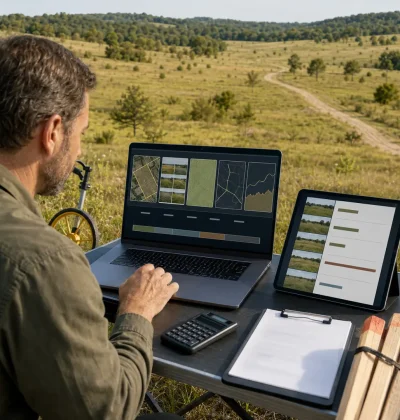
An automated valuation model built for land pulls comparable sales and weighs access, zoning, and terrain in seconds. You can run a free valuation and compare its range to your comps. When both agree, you have a strong number, and when they diverge, you know to dig deeper before you list.
Method 4: Highest and Best Use Pricing
Sometimes a parcel is worth more for what it could become than for what it is today. Pricing by potential use captures that value.
The highest and best use of your land, whether that is a homesite, a subdivision, farming, or recreation, can raise its value if the zoning and access support it. If your parcel is buildable or subdividable where comparable raw land is not, price for that potential, but only if it is genuinely permitted and realistic.
Method 5: Professional Appraisal
For high-value, unusual, or financed sales, a licensed appraisal gives you the most authoritative price. It is the slowest and most expensive method.
A certified appraiser inspects the land, researches comps, and produces a formal report, and you can find one through a body like the Appraisal Institute. A land appraisal typically costs $1,000 to $3,000. For a routine sale, comps plus an AI valuation usually get you there for free, but for a premium parcel or a lender’s requirement, an appraisal is worth it.
Should You Price to Sell Fast or Price for Top Dollar?
Before you set a number, decide what you are optimizing for, because the fast-sale price and the top-dollar price are not the same. Be honest about your priority.
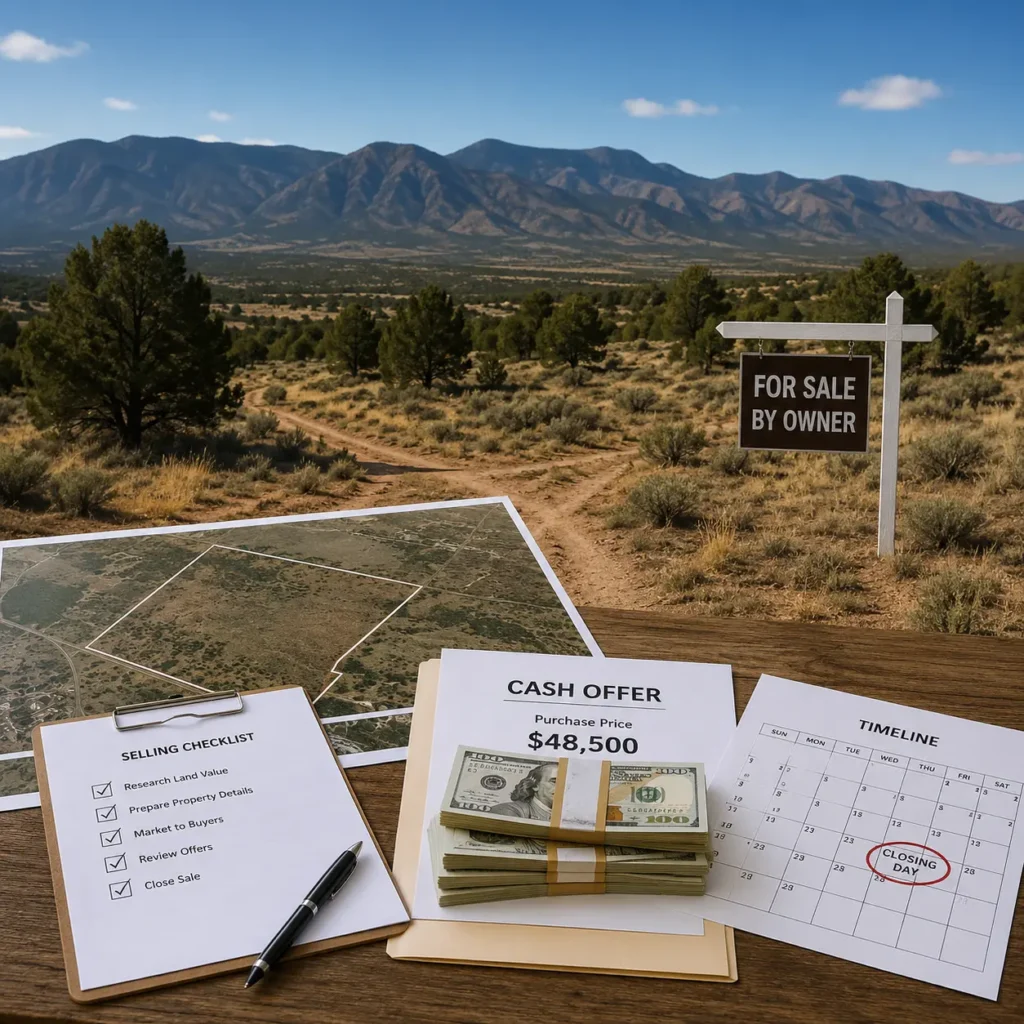
To sell fast, price at or slightly below market so your parcel stands out the moment it lists, when it gets the most attention. To hold out for top dollar, price slightly above market and be prepared to wait months and negotiate. List on an AI-powered land marketplace with low flat pricing so your holding costs stay minimal either way. Most sellers underestimate how much a fresh, well-priced listing outperforms a stale, overpriced one.
Common Pricing Mistakes That Keep Land From Selling
Pricing is where sellers lose the most time and money, and the mistakes are predictable. According to the National Association of Realtors, FSBO sellers struggle most with pricing, so avoiding these puts you ahead.
Do not anchor to what you paid or what you owe, because the market does not care about either. Do not scale price per acre in a straight line as size grows, do not confuse the county assessed value with market value, and do not price on a home-value tool that was never built for land. Do not ignore access and flood status, which swing value dramatically, and above all, do not overprice out of hope and plan to cut later. That plan wastes your best weeks and signals to buyers that something is wrong.
How to Adjust Your Price If Land Isn’t Selling
If your parcel is priced, listed, and marketed well but still sitting, the price is almost always the cause. A timely adjustment restarts interest.
Watch the signals: no inquiries in the first two to three weeks usually means the price is too high, while lots of views but no offers points the same way. Make a meaningful cut rather than a token one, since a small reduction rarely moves the needle. A single confident, data-backed adjustment beats a slow series of small drops that make the listing look stale.
Ready to Price and List Your Land?
The right price is the difference between a fast sale and a parcel that sits for a year, and now you have the methods and strategy to set it. Confirm your number, then get it in front of buyers.
When your price is set with comps and an AI valuation, you can list your land on a platform built for land buyers. If you want a data-backed starting point in about a minute, you can start free today and price with confidence.
Frequently Asked Questions
How do you calculate the price of vacant land?
Find recent sales of similar nearby parcels, divide each sale price by its acreage to get a price per acre, then apply that rate to your parcel with adjustments for access, zoning, and terrain. Remember that price per acre drops as parcels get larger, so compare against similar-size land. Confirm your figure with a free AI valuation.
What is the biggest mistake when pricing land to sell?
Overpricing. It is the number-one reason vacant land sits unsold. Anchoring to what you paid, scaling price per acre in a straight line, or pricing on hope all lead to a number buyers ignore. A fresh listing gets the most attention, so pricing it right from day one, rather than cutting later, sells land faster.
Should I price my land to sell fast or for top dollar?
It depends on your priority. To sell fast, price at or slightly below market so your listing stands out immediately. To maximize price, list slightly above market and be ready to wait months and negotiate. Decide upfront, because the two prices are different and trying to do both usually results in a parcel that just sits.
How much less do larger parcels sell for per acre?
There is no fixed ratio, but price per acre almost always declines as acreage rises, because larger parcels have fewer potential buyers. A 100-acre tract rarely sells for ten times a comparable 10-acre parcel. Always benchmark your price per acre against parcels of a similar size, not just a similar location, to avoid overpricing.
Do I need an appraisal to price land for sale?
Usually not. For a routine sale, comparable sales plus a free AI valuation give you a reliable price at no cost. A professional appraisal, typically $1,000 to $3,000, is worth it for high-value or unusual parcels, or when a lender, court, or tax authority requires a certified number. For most sellers, it is optional.
Resources & Further Reading
- The USDA Economic Research Service tracks average farmland values per acre as a national reference point.
- This overview of the sales comparison approach explains how comparable sales set land value.
- This explainer on automated valuation models covers how AI produces a pricing range.
- This overview of highest and best use explains pricing land by its potential.
- The Appraisal Institute is the professional body for finding a credentialed land appraiser.
- The National Association of Realtors reports that pricing is the top FSBO challenge for sellers.