Key Takeaways
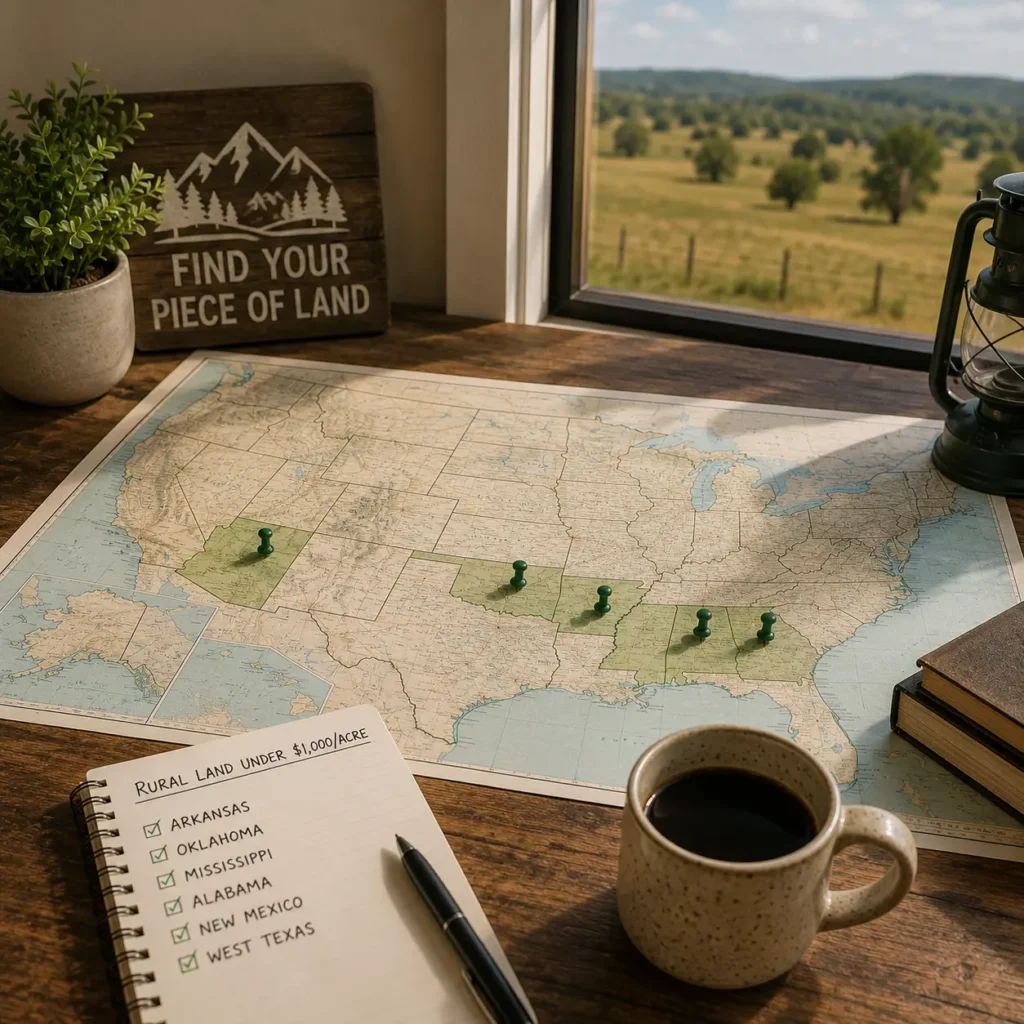
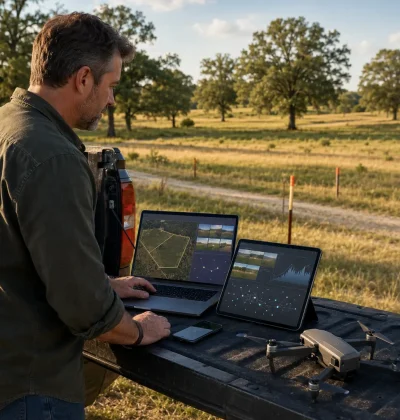
An honest look at which AI tools actually help you sell vacant land in 2026, and which ones waste your time.
- The most useful AI tools for land sellers are valuation, listing writing, social post creation, environmental scanning, and buyer matching.
- Generic chatbots like ChatGPT can write decent copy but cannot pull real land comps, check flood zones, or price a parcel, so they guess.
- In NAR’s 2025 survey, 68% of agents used AI, yet only 17% saw strong results, because most use general tools not built for real estate.
- AI valuation works well only when the model is trained on land sales, since home-focused estimators miss badly on raw parcels.
- AI speeds up the busywork of selling land, but it does not replace a title company, an attorney, or a licensed appraisal.
Every land seller now has access to AI, but almost no one is using it well. The reason is simple: most people reach for a general chatbot that was never built to price a parcel or check its flood zone. This guide breaks down the AI tools for selling land that genuinely move the needle, the ones that fall flat, and how to tell the difference. You will see exactly what each tool does, where it helps, and where it still needs a human.
Quick verdict: Use AI to price, write, disclose, and market your land faster, but only trust tools trained on land data. Generic AI is fine for a first draft of a listing and useless for pricing or due diligence. The real gains come from purpose-built land tools that pull real parcel data, not from a chatbot guessing.
What Are AI Tools for Selling Land?
AI tools for selling land are software features that automate the slow, technical parts of a land sale using data and machine learning. They handle pricing, writing, disclosure, and buyer outreach in seconds instead of hours.
The category covers a handful of distinct jobs: estimating market value from comparable sales, writing a buyer-focused listing, generating social posts, scanning a parcel for flood and access issues, and matching your land to active buyers. Some of these run on large language models, the same technology behind generative AI chatbots, while others rely on valuation models and geospatial data.
The important distinction is not AI versus no AI. It is general AI versus land-specific AI. A tool trained on millions of land sales behaves very differently from a chatbot trained on the open internet, and that difference decides whether the output is useful or a liability.
Are AI Tools Actually Worth It for Land Sellers?
Yes, but only if you use the right ones. Adoption is high and results are mixed, which tells you the tools matter less than how they are chosen.
In NAR’s 2025 technology survey, 68% of agents said they use AI, and 46% use it to generate content like listing descriptions. Yet only 17% reported significantly positive results. The gap is not that AI does not work. It is that most people use a general chatbot for tasks that need real data, then wonder why the output is thin.
For land specifically, the payoff is real when the tool is built for the job. AI valuation, listing generation, and buyer matching can compress days of work into minutes. The trick is matching the tool to the task instead of asking one chatbot to do everything.
The AI Tools That Actually Work for Selling Land
Five AI tools deliver genuine value for land sellers today. Each one replaces a slow manual step with a faster, data-backed version.
AI Land Valuation
This is the highest-value tool, because pricing decides whether your land sells or sits. A land-trained model pulls recent comparable sales near your parcel and weighs acreage, access, zoning, utilities, and flood status to produce a market value range.
The catch is training data. Home-focused estimators fail on raw land because land sales are sparse and every parcel is different. A model built on land behaves like an experienced buyer, not a home tool guessing. Regulators now hold these automated valuation models to formal quality-control standards under a 2024 federal rule, a sign the technology is maturing. You can run this on an AI-powered land marketplace and get a range in about a minute.
AI Listing Description Writer
Most seller-written land listings read like a tax record. An AI listing writer turns raw parcel data into a buyer-focused description that leads with the features that actually sell land.
This is where general AI is genuinely useful, since writing is what large language models do best, using natural language generation. A land-specific writer goes further by knowing which details matter to land buyers, like road frontage, timber, and buildability. Either way, always review the draft and add your local knowledge before publishing.
AI Social Media Post Creator
Land buyers are not only on land portals. They are in Facebook groups, on Instagram, and on YouTube, and reaching them means platform-specific posts.
An AI social post creator generates share-ready posts formatted for each platform in one click, with the right image ratio, caption length, and hashtags. It removes the design and marketing skill that used to gate social selling. This one works well because it is a writing-and-formatting task, exactly what AI handles reliably.
AI Environmental and Access Scanner
Buyers do due diligence, and an undisclosed flood zone or landlocked status can kill a deal weeks in. An AI scanner checks your parcel before you list.
These tools cross-reference public datasets, including the FEMA Flood Map Service Center, road access records, utility service areas, and zoning maps, then summarize the results. The value is speed and completeness: you disclose proactively instead of getting surprised. It does not replace a formal survey or title work, but it catches the obvious problems early.
AI Buyer Matching and Alerts
Instead of publishing and waiting, buyer matching connects your parcel to people already searching for it. The system compares your land to active buyer profiles by state, acreage, price, and land type.
Matching buyers get an alert, sometimes before your listing is fully public, so serious inquiries arrive faster. This works because it is a data-matching problem, which is what these systems do well. You can see how the demand side works by browsing an active vacant land marketplace and watching what buyers filter for.
Where AI Falls Short: What Doesn’t Work
AI is not magic, and pretending otherwise costs sellers money. Here is where the tools break down and a human is still required.
Generic chatbots cannot pull real comparable sales or parcel records, so when you ask ChatGPT what your land is worth, it guesses from patterns and often invents a number. Home-value estimators are trained on houses and miss badly on raw land. And no AI tool replaces the legal and financial core of a sale: a title company still confirms clear title, an attorney still reviews contracts, and a licensed appraisal is still what a lender or court will accept.
AI also cannot judge the intangibles a buyer feels on the ground, cannot take the photos that sell a parcel, and cannot negotiate for you. Treat AI as a fast first draft and a research assistant, not the final word.
Generic AI vs. Purpose-Built Land AI
The single biggest factor in whether AI helps you sell land is which kind of AI you use. This table shows why the distinction matters.
| Task | Generic AI (ChatGPT, Gemini) | Purpose-Built Land AI |
| Pull real comparable land sales | No | Yes |
| Price a parcel accurately | Guesses, often wrong | Data-backed range |
| Write a listing description | Yes, generic | Yes, land-specific |
| Check flood zone and access | No | Yes |
| Match to active land buyers | No | Yes |
| Generate social posts | Yes | Yes |
Generic AI is a capable writing assistant and nothing more. Purpose-built land AI connects to real parcel and sales data, which is what turns a guess into a decision you can price and disclose on.
How to Actually Use AI to Sell Your Land Faster
The smart workflow combines a few tools in order, each doing the job it is good at. Follow this sequence and you compress weeks of work into an afternoon.
Start with an AI valuation to set a realistic price, then use an AI listing writer to draft the description and add your own details. Run an environmental scan to disclose access and flood status upfront, generate social posts to widen reach, and let buyer matching surface early leads. When the number and listing are ready, you can list your land and put it in front of real buyers. These AI tools are included on the paid plans, which start at a few dollars a month, and you can run a free valuation during the trial to test the workflow.
The goal is not to hand the sale to a machine. It is to let AI clear the busywork so you can focus on the parts that need a human.
Who Should and Shouldn’t Rely on AI Tools
AI tools fit most land sellers, but not every situation. Be honest about where you land.
Use them if you want to price accurately, list faster, and reach more buyers without hiring an agent, which describes nearly every individual seller and investor. Lean on them heavily if you manage multiple parcels, since the time savings compound.
Be more cautious if your parcel is unusual, high-value, or legally complicated, where a licensed appraiser and an attorney should lead and AI plays a supporting role. And never rely on a generic chatbot alone for pricing or disclosure. When you are ready to put land-specific tools to work, you can start free today.
Frequently Asked Questions
Can AI tell me what my land is worth?
A land-trained AI valuation can give you a reliable market value range by pulling real comparable sales and weighing access, zoning, and terrain. A general chatbot like ChatGPT cannot, because it has no access to parcel records and will guess. Use a purpose-built land tool, then confirm with your own comps.
Is ChatGPT good for selling land?
It is useful for a first draft of a listing description and social captions, since writing is its strength. It is not reliable for pricing, comparable sales, flood-zone checks, or due diligence, because it cannot pull real data. Use it for words, and use land-specific tools for numbers and facts.
What AI tools do land sellers actually use?
The most valuable ones are AI land valuation, AI listing description writers, AI social post creators, AI environmental and access scanners, and AI buyer matching. Each automates a slow manual step. The best results come from tools trained on land data rather than general-purpose chatbots.
Do AI tools replace a real estate agent for land?
For most parcels, yes. AI handles pricing, listing, disclosure, and buyer outreach, which are the tasks sellers pay agents to do. It does not replace a title company, an attorney for complex deals, or a licensed appraisal when a lender or court requires one. Those remain human jobs.
Are AI land valuations accurate?
They can be, when the model is trained on land sales and pulls real comps. Federal regulators now hold automated valuation models to quality-control standards, reflecting their growing reliability. Accuracy drops in very rural areas with few comparable sales, so treat the output as a strong range and verify with local data.
Resources & Further Reading
- NAR’s 2025 technology survey reports how agents use AI and what results they see.
- The CFPB’s quality control standards for automated valuation models explain how AI valuation is now regulated for accuracy.
- This overview of automated valuation models covers how AI estimates property and land value.
- This explainer on natural language generation describes the technology behind AI listing writers.
- Read how generative artificial intelligence powers today’s AI writing tools.
- The FEMA Flood Map Service Center is the public data source behind AI environmental scanners.